
India is set to press for early disengagement of troops from the remaining friction points in eastern Ladakh at a fresh round of high-level military talks with China on August 14, people familiar with the matter said on Saturday.

The sources have said that patrolling will begin at these points once the disengagement that began last week is completed and both sides will move their respective troops and dismantle temporary structures.
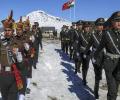
Sources said India will not lower its guard and will maintain the current state of very high-level of combat readiness in eastern Ladakh till there are visible changes in the ground situation.

The official cited it as an example of 'how the Chinese military is trying to resolve issues through dialogue mechanisms'.
India and China have resolved the stand-off at the Ladakh border and withdrawal of troops will begin on Friday and be completed by September 30, External Affairs Minister Sushma Swaraj said describing the resolution of the issue as a "big accomplishment."

A broad consensus has been achieved by India and China on restoring the 'ground situation' along the Line of Actual Control (LAC) pursuant to talks, including for patrolling and grazing cattle in the traditional areas, Defence Minister Rajnath Singh said on Thursday.
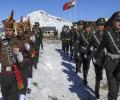
India and China held two days of military talks in an "open and constructive manner" for an early and mutually acceptable resolution of the remaining issues along the Line of Actual Control in eastern Ladakh and agreed to maintain peace on the ground.

Union minister Kiren Rijiju on Friday said he interacted with soldiers of China's People's Liberation Army along the Sino-Indian border near Tawang during a visit to an Indian Army post on Diwali.
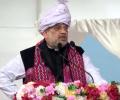
China on Monday criticised Home Minister Amit Shah's visit to Arunachal Pradesh, stating that it violated Chinese sovereignty over the area, a claim outrightly dismissed by India.
Singh and Esper also deliberated on ways to further boost bilateral defence and security cooperation, they said, adding the telephonic conversation took place at the request of the US side.

It took India and the Indian Army to show to the world that enough is enough and to challenge the neighbourhood bully, he said.

The Jaishankar-Wang talks came amid the dragging border row in eastern Ladakh that entered its fifth year in May.

As India's stock rises, the resolution of the border row may become even more difficult, warn Harsh V Pant and Kalpit Mankikar.

On Monday China said it has "effectively managed and controlled" frictions in certain border areas.

India and China on Monday ended their standoff in Dokalam by withdrawing their troops from the area, just days before Prime Minister Narendra Modi's visit to China to attend the BRICS summit next week.

The Indian Army began patrolling at Demchok on Friday, days after Indian and Chinese troops completed disengagement at the two friction points in eastern Ladakh, Army sources said.

'In the short term the relationship will get worse.'

Jaishankar said, "The immediate part which awaits us is what we call the de-escalation, which is the build-up of forces along the Line of Actual Control."

The relations between India and China cannot be normal if peace and tranquillity in border areas are disturbed, External Affairs Minister S Jaishankar said on Friday.
The commanders will also deliberate on the overall situation in Jammu and Kashmir besides delving into issues having national security implications, they said. However, the main focus will be on the situation in eastern Ladakh where Indian and Chinese troops are locked in an eyeball-to-eyeball face-off in Pangong Tso, Galwan Valley, Demchok and Daulat Beg Oldie, the sources said.
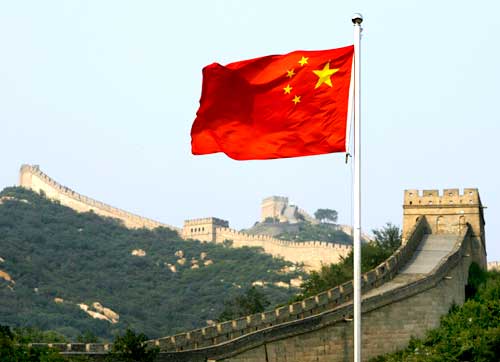
Bhutan firmly abides by the one-China principle meaning Taiwan and Tibet are part of China and stands ready to work with China for an early settlement of the boundary issue and advance the political process of establishing diplomatic relations, it said.

China said that it had put off the visit of Indian pilgrims who enter Tibet via the Nathu La pass "for safety reasons" in view of the border issue.

The naming of the places in memory of the soldiers comes days after Chinese military commander Qi Fabao, who was injured in the Galwan Valley clash with Indian troops in June, 2020, attended the ruling Communist Party of China's (CPC) Congress as a delegate.

External affairs ministry spokesperson Gopal Baglay, however, refused to comment whether there was reduction of Indian troops at the tri-junction between India-China-Bhuta.

Qin, who is visiting New Delhi to attend the G20 Foreign Ministers meeting on Thursday, is expected to meet Jaishankar on its sidelines though the foreign ministry here is tight-lipped about it.
"China creeps towards hegemony in Asia, threatens India's borders, and treats other countries as junior partners, Indian-American Congressman Ro Khanna said.
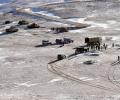
The Indian and Chinese troops are locked in an over three-year confrontation in certain friction points in eastern Ladakh even as the two sides completed disengagement from several areas following extensive diplomatic and military talks.
Responding to Conservative Party MP Flick Drummond on the implications for British interests of a dispute between a 'Commonwealth member and the world's largest democracy on the one side, and a state that challenges our notion of democracy on the other,' he described the escalation in eastern Ladakh as "a very serious and worrying situation", which the UK is "monitoring closely".
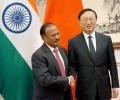
'Russian diplomacy is presumably at work.' 'The ground is slippery, because "territorial sovereignty" is a hugely sensitive issue,' says Ambassador M K Bhadrakumar.

The Chinese military on Friday confirmed that the troops of China and India have begun the process of disengagement from the Patrolling Point 15 in the Gogra-Hotsprings area of eastern Ladakh in a 'coordinated and planned way'.

Congress spokesperson Pawan Khera said during the 1962 war, then Bharatiya Janata Party leader Atal Bihari Vajpayee demanded that a session of Parliament be convened to discuss it and then Prime Minister Jawaharlal Nehru accepted his demand.
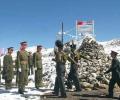
China on Wednesday said the latest round of the border talks with India was held in a "candid and pragmatic atmosphere" and the two sides had a "positive, constructive and in-depth discussion" on the resolution of the remaining issues along the Line of Actual Control in the Western Sector.

Glimpses from Yudh Abhyas, the India-US military exercise currently being conducted in Tapovan, Uttarakhand, 100 km away from the Line of Actual Control.

Gen Pande also said that Indian troops are adequately deployed along the Line of Actual Control to deal with any situation and that guidance has been given to them to "remain firm and resolute" in their tasks.
Beijing should remember the advice of its celebrated military strategist Sun Tzu: 'Fight not unless the position is critical.'
The government needs to answer the critical question of whether it has accepted any restrictions on its infrastructure creation activities, asserts Ajai Shukla.
'Neither are Baloch insurgents capable of breaking up Pakistan, nor has Pakistan learned any lessons from the 1971 debacle that led to the country's dismemberment.'
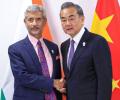
China on Friday concurred with External Affairs Minister S Jaishankar's observation that an Asian Century cannot happen if India and China don't join hands and emphasised that the two neighbouring countries have 'far more common interests than differences'.
The talks are following up the outcome of the 19th round of Corps Commander-level talks held between the two sides on August 13-14 at the Chushul Moldo border meeting point.

General Zhao Zongqi is well known in India for having commanded the Chinese troops during the Dokalam episode. Zhao knows every inch and corner of the Indian border, at least the Eastern and Central sectors, including the Naku La area which witnessed fist-fights between Indian and Chinese troops in April/May. Claude Arpi introduces us to the PLA generals masterminding the Chinese aggression in Ladakh.
